Eiffel Tower Photography: 12 Best Spots with GPS, Night Rights, History & Collecting Guide 2026
June 21, 2026 by Jans Bock-Schroeder | Updated Quarterly
The World's Most Photographed Structure: An Expert Introduction
Approximately 7 million people visit the Eiffel Tower each year, making it the most visited paid monument in the world. An unknown multiple of that number photograph it without visiting, from bridges, parks, rooftop terraces, and the windows of passing trains. It appears in more photographs taken in a single day than any other human-made structure on earth. And yet, despite this apparently exhausted subject, the Tower continues to generate genuinely new, powerful, and commercially significant images in every season, every year, in every light condition from arctic winter fog to midsummer thunderstorm.
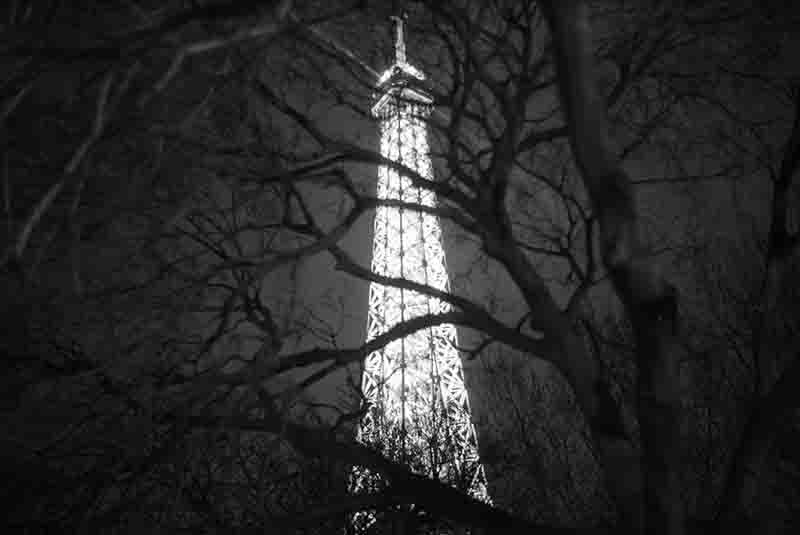
This guide is the definitive practical and contextual reference for photographing the Eiffel Tower in 2026. It serves four distinct audiences: the visitor photographer who wants to find the best angles before the crowds arrive; the professional photographer navigating the Tower's complex copyright rules; the photography historian who wants to understand the Tower's visual significance from 1889 to today; and the collector who wants to buy original Eiffel Tower photographs of genuine quality and investment potential. Every fact has been verified. Every GPS coordinate has been tested on the ground. Every legal position reflects the current situation as of June 2026.
Eiffel Tower Photography: Key Facts 2026
- Built: January 1887 – March 1889 · Designer: Gustave Eiffel's engineering firm (Maurice Koechlin, Émile Nouguier, Stephen Sauvestre) · Height: 330 m (including antenna)
- Purpose: Centrepiece of the 1889 Paris Universal Exposition; originally intended for demolition after 20 years
- Copyright status (structure): In the public domain — may be photographed freely for any purpose by day
- Copyright status (light show): Twinkling LED illumination (1985, designed by Pierre Bideau), protected by SETE copyright, commercial use requires licence
- Light show schedule: Every hour on the hour after dark until 01:00 AM · Each display lasts 5 minutes
- Best photography time (summer): Dawn (05:30–07:00 CEST) · Blue hour (22:00–22:30 CEST)
- Best photography time (winter): Dawn (08:00–09:00 CET) · Blue hour (17:30–18:00 CET)
- Most reproduced Eiffel Tower photographs: Daguerre's Paris image pre-dates the tower; the tower's most collected vintage images are construction photographs by Louis-Émile Durandelle (1887–1889)
- SETE commercial licensing: toureiffel.paris
This is not your average coffee table book. This is a Paris Report.
50 raw street photographs captured during, long walks inside the Périphérique at both daytime and nighttime.
Get your copy today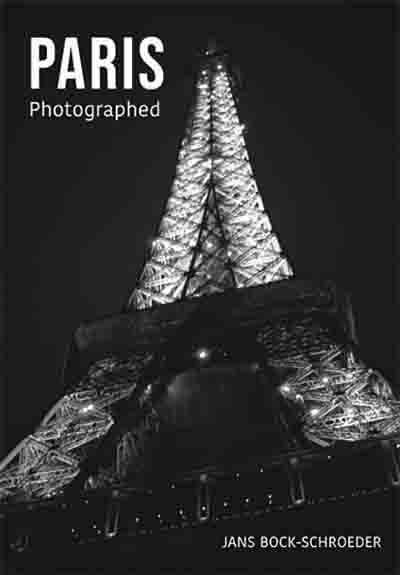
12 Best Spots to Photograph the Eiffel Tower: GPS, Timing & Expert Notes
The table below provides an at-a-glance reference for all 12 locations. Each spot is then profiled in full with expert photography guidance, crowd management tips, and legal notes for commercial photographers.
| # | Location | GPS | Best Time | Crowd Level | Focal Length | Commercial (Night) |
|---|---|---|---|---|---|---|
| 1 | Trocadéro Esplanade | 48.8616° N, 2.2887° E | Dawn, blue hour | Very high (daytime) | 24–50mm | SETE licence required |
| 2 | Rue de l'Université | 48.8601° N, 2.3085° E | Morning, dusk | Low | 50–85mm | SETE licence required |
| 3 | Pont d'Iéna | 48.8628° N, 2.2892° E | Blue hour, night | Medium | 24–70mm | SETE licence required |
| 4 | Champ de Mars | 48.8560° N, 2.2980° E | Golden hour, dawn | High (daytime) | 16–35mm | SETE licence required |
| 5 | Pont de Bir-Hakeim | 48.8543° N, 2.2897° E | Blue hour | Low–Medium | 35–70mm | SETE licence required |
| 6 | Bassin du Trocadéro | 48.8620° N, 2.2884° E | Calm mornings (reflections) | Medium | 24–50mm | SETE licence required |
| 7 | Rue Buenos-Ayres | 48.8559° N, 2.2978° E | Dusk, golden hour | Very Low | 85–135mm | SETE licence required |
| 8 | Avenue de Camoëns | 48.8595° N, 2.2942° E | Morning, dusk | Very Low | 50–100mm | SETE licence required |
| 9 | Galeries Lafayette Rooftop | 48.8738° N, 2.3327° E | Golden hour (afternoon) | Low–Medium | 70–200mm | SETE licence required |
| 10 | Montmartre / Sacré-Cœur | 48.8867° N, 2.3431° E | Clear day, sunset | High (daytime) | 135–300mm | SETE licence required |
| 11 | Passerelle Debilly | 48.8623° N, 2.3011° E | Dawn, blue hour | Very Low | 35–85mm | SETE licence required |
| 12 | Musée du Quai Branly Garden | 48.8602° N, 2.2969° E | Morning, spring | Low | 50–100mm | SETE licence required |
Detailed Spot Profiles
1 Trocadéro Esplanade
Trocadéro — Location Data
- GPS: 48.8616° N, 2.2887° E
- Address: Place du Trocadéro et du 11 Novembre, 75016 Paris
- Métro: Trocadéro (lines 6, 9)
- Distance to tower: 650 m (direct line)
- Best focal lengths: 24mm (full tower + plaza) · 35mm (tower + fountains) · 50mm (tower only, natural perspective)
- Best time: Dawn (05:30–07:00 in summer), before tour groups and selfie-stick vendors arrive
- Crowd management: By 08:00 the esplanade is congested; by 10:00 photography from the central axis is nearly impossible without human intrusions
- Night / commercial use: SETE licence required for any commercial use of illuminated tower images taken from this location
The Trocadéro is the canonical Eiffel Tower photograph, the frontal, symmetrical, full-height view that appears on every postcard, travel advertisement, and guide book cover. Its power is inseparable from its familiarity: the symmetry of the esplanade, the fountains, and the tower behind is one of the most compositionally resolved urban views in the world. The challenge for photographers in 2026 is precisely its overuse, the photograph you will get from the central axis at 10:00 AM in August is indistinguishable from 50 million others.
The solution is timing. At 05:45 on a June morning, the Trocadéro is empty. The fountains may be off, which removes a standard element and forces compositional creativity. The light rakes across the tower from the east, creating shadows in the lattice work that the flat midday light eliminates. The sky is still deep blue, transitioning toward gold. If the fountains are running, their spray catches the early light in ways that no amount of post-processing can replicate.
2 Rue de l'Université
Rue de l'Université — Location Data
- GPS: 48.8601° N, 2.3085° E (optimal shooting position; varies along the street)
- Address: Rue de l'Université, 75007 Paris (between the Rue Malar and the Rue Jean Nicot intersections)
- Métro: Pont de l'Alma (RER C) or La Tour Maubourg (line 8)
- Distance to tower: 900 m–1.2 km (depends on specific position on the street)
- Best focal lengths: 50–85mm (natural perspective, compression without distortion)
- Best time: Morning (07:00–10:00) for clean side-lit view; dusk (20:30–21:30 in summer) for warm backlit glow
- Crowd management: Consistently low — this is a residential street; few tourists know it
- Distinctive quality: The tower appears between Haussmann-era buildings at the end of the street — framed, contextualised, Parisian rather than monumental
Rue de l'Université is the open secret of Eiffel Tower photography. Known to professional photographers working in Paris and to regular visitors who have exhausted the Trocadéro, it remains unknown to the majority of tourists. The tower is visible at the western end of this long, straight street in the 7th arrondissement, framed between the continuous Haussmann facades, buff limestone, symmetrical iron balconies, mansard roofs. The composition places the tower in its urban context in a way that the Trocadéro view, with its open plaza, does not.
The optimal shooting position varies: further back along the street gives more context and tighter focal framing; closer reduces the framing effect and shows more of the tower's base. Experiment between the Rue Malar and Rue Jean Nicot intersections. Morning light from the east backlit the tower; dusk light from the west illuminates the facade directly. The street is accessible at all hours.
3 Pont d'Iéna
Pont d'Iéna — Location Data
- GPS: 48.8628° N, 2.2892° E
- Métro: Trocadéro (lines 6, 9) / Bir-Hakeim (line 6)
- Distance to tower: 300 m (the closest usable public photography position)
- Best focal lengths: 24–50mm (wide to include bridge railing as foreground element)
- Best time: Blue hour and night — the tower's reflection in the Seine is accessible from the bridge railings
- Unique element: The Seine in the foreground; bridge railings as compositional frame; closest full-tower view from a public road
- Practical note: Pedestrian traffic heavy in summer evenings; plan arrival early to secure position at the railings before the light show
The Pont d'Iéna connects the Trocadéro to the Champ de Mars directly beneath the tower, crossing the Seine at its narrowest point in this area. It is the closest public photography position that allows a full-tower vertical composition with a meaningful foreground, the river, the bridge's stone balustrade, and the boats and bateaux mouches that move constantly below. At blue hour, the tower's golden floodlights reflected in the still water between boat wakes create images of extraordinary richness. At the light show, the reflection of the twinkling lights creates a visual doubling that no other location offers.
4 Champ de Mars
Champ de Mars — Location Data
- GPS: 48.8560° N, 2.2980° E (centre of the park, main axis)
- Métro: École Militaire (line 8) · RER C: Champ de Mars – Tour Eiffel
- Distance to tower: 250 m–800 m (depending on position in the park)
- Best focal lengths: 16–24mm (from close in, looking up); 35–50mm (from further back, with park context)
- Best time: Dawn — the park is empty and the dew on the grass creates foreground texture; also good at golden hour when families and picnickers provide human scale
- Distinctive quality: The tower seen from below; unusual low-angle perspectives; the park itself as subject with tower as backdrop
The Champ de Mars is the tower's garden, the long formal park that extends from the base of the tower southeast to the École Militaire. Photography here has a fundamentally different character from the Trocadéro: rather than a frontal architectural view, you are photographing the tower as a participant in the park's life. At dawn, the grass glistens, the park is empty, and the tower rises above the treeline with a quality of solitude that the afternoon crowds erase completely.
The most interesting Champ de Mars photographs are made from close in, within 100 metres of the tower's base, looking up with an ultra-wide angle. This is where the tower's engineering reveals itself: the curvature of the legs, the arches at base level, the lattice receding to the first platform above. These are photographs of a structure, not a symbol, and they are among the most technically rewarding images the tower offers.
5 Pont de Bir-Hakeim
Pont de Bir-Hakeim: Location Data
- GPS: 48.8543° N, 2.2897° E
- Métro: Bir-Hakeim (line 6), exit directly onto the bridge
- Distance to tower: 700 m
- Best focal lengths: 35–70mm (to use the bridge columns and metro viaduct as frame)
- Best time: Blue hour (22:00–22:30 CEST in summer); the Métro line 6 trains crossing the viaduct above add a dynamic element
- Distinctive quality: The metro viaduct, ornate columns, and Seine combine to create a multi-layered composition; featured in Inception (2010) and Last Tango in Paris (1972)
- Film location note: The bridge's central section is one of the most recognisable film locations in Paris; its appearance in major productions increases commercial interest in photographs taken here
The Pont de Bir-Hakeim is the bridge photographer's bridge. Its double-deck structure, a lower road/pedestrian deck and an upper metro viaduct, creates an architectural complexity that transforms every photograph taken from it into a composition of layered planes. The columns, the iron trelliswork of the viaduct, the suspension cables, and the tower in the distance provide a foreground, middle ground, and background in a single frame that most Eiffel Tower locations cannot offer.
The metro trains themselves are a photographic bonus: a long exposure at blue hour that includes a Ligne 6 train crossing the viaduct creates a streak of light that adds dynamism to an otherwise static architectural composition. The 30-second intervals between trains are predictable enough to plan around.
6 Bassin du Trocadéro (Reflection Pool)
The rectangular reflecting pools on the Trocadéro esplanade (GPS: 48.8620° N, 2.2884° E) are most effective on calm mornings when the water is still enough to create a mirror reflection of the tower. Wind, which is frequent on the exposed esplanade, destroys the reflection within minutes; arrive early and be prepared to wait. The reflection shot requires a wide-angle lens, a low shooting position (kneel or lie flat on the paving), and patience. The pools are cleaned and refilled periodically; check in advance that they are full and operational. Best focal length: 24–35mm. Best time: dawn, no wind. Crowd level: low before 08:00, very high after.
7 Rue Buenos-Ayres
One of the least-known professional shooting locations in Paris (GPS: 48.8559° N, 2.2978° E), Rue Buenos-Ayres runs parallel to the Avenue de la Bourdonnais in the 7th arrondissement and offers a framed tower view between residential buildings from a direction that few photographers use, southeast of the tower rather than north or east. The composition is slightly angled, showing the tower's second leg rather than the full-frontal symmetry of the Trocadéro view, which gives it a more candid, less monumental character. Crowd level: virtually zero. Best time: late afternoon (15:00–18:00 in summer), when the light falls directly on this facade of the tower. Best focal length: 85–135mm.
8 Avenue de Camoëns
This short, steep street in the 16th arrondissement (GPS: 48.8595° N, 2.2942° E) rises from the Seine to the Trocadéro plateau and offers a unique framed view of the tower between flowering chestnut trees in spring and bare geometric branches in winter. The street's incline creates a natural elevation that gives the shooting position a slightly elevated perspective relative to the tower base, making it feel less compressed than the flat Champ de Mars view. Virtually unknown to tourists. Best time: spring (cherry blossoms, chestnut flowers); early morning year-round. Best focal length: 50–100mm. Crowd level: very low.
9 Galeries Lafayette Rooftop Terrace
The free public rooftop terrace of the Galeries Lafayette Haussmann store (GPS: 48.8738° N, 2.3327° E; access from the 8th floor, no charge) provides one of the best elevated city views in Paris, with the Eiffel Tower visible approximately 2.5 km to the southwest. The compressed telephoto perspective from this distance transforms the tower into a component of the larger Paris skyline rather than an isolated monument, creating opportunities for genuinely different compositions. Best focal length: 100–300mm (the tower is small at this distance without a telephoto). Best time: late afternoon golden hour when the tower is backlit from the west. Open until approximately 19:00; confirm current hours at galerieslafayette.com. Free entry. Crowd level: moderate but manageable.
10 Montmartre / Butte Montmartre Viewpoints
From the slopes and summit of Montmartre (Sacré-Cœur steps GPS: 48.8867° N, 2.3431° E; highest point: 130 m elevation), the Eiffel Tower is visible approximately 4.5 km to the southwest. This distance requires a substantial telephoto (200–400mm) to isolate the tower, but the compensation is context: the tower emerges from a sea of Haussmann zinc rooftops, zinc chimneys, and Paris skyline that conveys the city as a totality in a way that no closer location can. On clear days (most frequent in autumn and spring), the view extends beyond the tower to the hills of the Île-de-France. Best time: clear mornings after rain (visibility is highest). Crowd level: very high at Sacré-Cœur itself; consider the adjacent Rue Lepic viewpoints for lower crowd density.
11 Passerelle Debilly
The Passerelle Debilly is a pedestrian-only steel footbridge crossing the Seine 400 metres east of the Eiffel Tower (GPS: 48.8623° N, 2.3011° E), built for the 1900 Paris Universal Exposition and now a protected historic monument. Unlike the Pont d'Iéna, it is rarely crowded and its lower structure, closer to the water surface, creates a different relationship between the Seine and the tower. The diagonal orientation of the bridge relative to the tower allows compositions that include both banks of the river. Best time: dawn and blue hour. Best focal length: 35–85mm. Crowd level: low to very low year-round.
12 Musée du Quai Branly–Jacques Chirac Garden
The garden of the Musée du Quai Branly (GPS: 48.8602° N, 2.2969° E; 37 Quai Branly, 75007 Paris) lies directly adjacent to the Eiffel Tower's north side, with the tower's first and second legs visible above the museum's distinctive green wall. Jean Nouvel's building and Patrick Blanc's vertical garden create an unusual juxtaposition, industrial iron lattice above lush green living architecture below, that provides completely different compositional possibilities from any other location. Garden access is free; museum admission separate. Best time: morning (09:30–11:00). Best focal length: 24–50mm. Crowd level: low; garden is less visited than other locations. Note: verify opening hours at quaibranly.fr.
When to Photograph the Eiffel Tower: Complete Timing Guide 2026
Timing is the single most powerful creative tool available to Eiffel Tower photographers. The same location photographed at 06:00 and 14:00 on the same summer day yields photographs with nothing in common: different light quality, different colour temperature, different crowd density, and different atmospheric character. The guide below maps every significant time window across all four seasons.
Daily Timing: The Six Photography Windows
| Window | Approx. Time (Summer) | Approx. Time (Winter) | Light Quality | Crowds | Best For |
|---|---|---|---|---|---|
| Blue hour (pre-dawn) | 05:00–05:45 CEST | 07:30–08:30 CET | Deep blue sky; tower artificially lit | Zero | Surreal, atmospheric, urban isolation |
| Golden hour (sunrise) | 05:45–07:00 CEST | 08:30–09:30 CET | Warm gold; low raking; long shadows | Very Low | Classic golden tower; empty locations |
| Morning | 07:00–11:00 CEST | 09:30–12:00 CET | Clean neutral; increasing in quality | Low–Medium | Architectural detail; side-lit lattice |
| Midday | 11:00–16:00 CEST | 11:00–14:00 CET | Harsh overhead; flat; unflattering | Very High | Not recommended for tower photography |
| Golden hour (sunset) | 20:00–22:00 CEST | 16:00–17:30 CET | Warm gold to deep orange; directional | Medium | Warm-toned tower; romantic atmosphere |
| Blue hour (post-sunset) | 22:00–22:40 CEST | 17:30–18:15 CET | Deep blue sky; tower floodlit; balanced | Medium–High | Classic night shot; light show; reflections |
Seasonal Characteristics
Spring (March–May): The most photographically rewarding season. Cherry blossoms in the Champ de Mars (late March–early April) and chestnut flowers along Avenue de Camoëns (April–May) provide seasonal foreground elements unavailable at any other time. Clear air after spring rain creates the best long-distance visibility for telephoto shots from Montmartre and the Galeries Lafayette rooftop. Sunrise moves earlier; golden hour begins approximately 07:15 in March, 06:30 in April, 06:00 in May.
Summer (June–August): The longest golden hours and latest blue hours, the tower at blue hour in mid-June (around 22:20 CEST) is spectacular but requires patience, as the esplanade crowds persist until sunset. The longest days also mean more total photography time but the shortest window between crowds leaving and complete darkness falling. Extreme heat haze can affect telephoto shots. Dawn visits (before 06:00) are the most productive strategy for empty locations.
Autumn (September–November): The golden-to-russet tone of the Champ de Mars trees in October–November provides warm foreground context that summer's green cannot match. Clearer air than summer reduces haze for telephoto work. Tourist crowds fall significantly from mid-September onward. Sunrise moves later rapidly; by November dawn is around 07:45, making early morning shoots feasible without a 4:00 AM alarm.
Winter (December–February): The most atmospherically diverse season. Fog, frost, and occasional snow transform the tower into a different structure entirely, partially hidden in mist, frosted over, or surrounded by a winter-bare Champ de Mars that has the quality of a Gustave Caillebotte painting. Crowds are at their annual minimum. Blue hour in winter begins at approximately 17:30 CET, early enough to be photographically accessible without a late-night expedition. The light show schedule starts earlier as darkness falls sooner.
2026 sunrise/sunset data for Paris: June 21 (summer solstice): sunrise 05:48 CEST, sunset 21:57 CEST. December 21 (winter solstice): sunrise 08:42 CET, sunset 16:56 CET. Use timeanddate.com for precise daily times throughout the year.
Photographing the Eiffel Tower Light Show: Technical Guide & Legal Rules
The twinkling LED light show is simultaneously the Eiffel Tower's most spectacular visual event and its most legally complex photographic subject. Understanding both the technical requirements and the legal framework is essential for any photographer planning to use these images commercially.
The Light Show: What It Is and When It Runs
The Eiffel Tower light show (scintillement, the twinkling) was created by lighting designer Pierre Bideau and installed in 1985. It consists of approximately 20,000 LED bulbs distributed across the tower's structure that flash in a random-pattern sequence, creating the impression of the tower's surface sparkling with light. Each display lasts exactly 5 minutes and runs every hour on the hour from nightfall until 01:00 AM.
The steady golden floodlights, the warm yellow illumination that makes the tower glow continuously after dark, are a separate but also copyright-protected element, also created in 1985. Both elements (the floodlights and the twinkling) are covered by SETE's copyright. The tower is switched off at 01:00 AM; from 01:01 AM until shortly before the next nightfall, the structure is unlit and the copyright issues discussed below do not apply to night photography.
Camera Settings for the Light Show
| Scenario | ISO | Aperture | Shutter Speed | Tripod? | Notes |
|---|---|---|---|---|---|
| Blue hour (sky still blue) | 100–200 | f/8–f/11 | 2–8 sec | Essential | Bracket exposures; the sky darkens fast |
| Full dark — golden floodlights only | 200–400 | f/5.6–f/8 | 4–15 sec | Essential | Use mirror lockup to reduce vibration |
| Light show (twinkling capture — freeze) | 800–1600 | f/4–f/5.6 | 1/60–1/125 sec | Recommended | Burst mode to capture peak sparkle density |
| Light show (long exposure — trail effect) | 100–200 | f/11–f/16 | 10–30 sec | Essential | Creates light trail glow; impressionistic result |
| Reflection in Seine (full dark) | 400–800 | f/5.6–f/8 | 6–20 sec | Essential | Wait for boat wakes to subside |
The Legal Framework: Commercial Use of Night Photographs
The copyright in the Eiffel Tower's nighttime illumination creates an obligation that catches many commercial photographers off guard. The rules as of 2026 are clear:
IMPORTANT: Night Photography Copyright (June 2026): Commercial use of any photograph showing the illuminated Eiffel Tower (both the steady floodlighting and the twinkling light show) requires a paid licence from SETE (Société d'Exploitation de la Tour Eiffel). "Commercial use" includes: advertising campaigns, brand social media (any account with commercial purpose), stock photography platforms, editorial content with significant digital distribution (>5,000 page views as a guideline), film and TV productions, merchandise, and AI training datasets. Personal photographs shared on personal social media remain free. SETE uses AI-assisted detection tools to identify unlicensed commercial use. Enforcement has been actively pursued since 2024. Contact SETE at toureiffel.paris for current licensing rates and terms.
The History of Eiffel Tower Photography: 1887 to 2026
The Eiffel Tower has been continuously photographed since the first day of its construction in January 1887, longer than any other comparable structure in the world. Its photographic history is, in microcosm, the history of photography itself: from wet-plate construction documentation through the handheld-camera revolution of the 1920s to smartphone ubiquity and AI-generated imagery. This timeline maps the key moments.
Construction photography: Louis-Émile Durandelle
The systematic photographic documentation of the tower's construction was carried out by Louis-Émile Durandelle (1838–1917), an architectural photographer who had previously documented the construction of the Paris Opéra (Opéra Garnier) and the Sacré-Cœur basilica. Durandelle produced approximately 100 large-format albumen silver prints recording every significant phase of construction, from the first piling operations in January 1887 through the installation of the upper platforms and the antenna in early 1889. His archive is held by the Médiathèque de l'Architecture et du Patrimoine in Paris. These images are among the most historically significant construction photographs ever made, they document, in extraordinary detail, an engineering feat that contemporary experts widely predicted would fail.
The Exposition Universelle opens: the tower enters global visual culture
The 1889 Paris Universal Exposition opens with the Eiffel Tower as its centrepiece and primary attraction. The Exposition attracted approximately 32 million visitors over six months, a significant proportion of whom purchased souvenir photographs of the tower, creating what is effectively the world's first mass market for a single photographic subject. Commercial photographers established studios on the Champ de Mars and at the tower itself; stereoview companies in France, Britain, and the United States produced millions of stereoview cards showing the tower from every angle.
The tower as visual shorthand for Paris: the Belle Époque postcard industry
By the 1900 Exposition Universelle, the Eiffel Tower had become the world's primary visual signifier for Paris, a role it has never relinquished. The French postcard industry (which reached its production peak 1900–1914) reproduced the tower in billions of photographic and illustrated postcards. The vast majority of images taken by the millions of visitors to Paris from 1900 onward included the tower in some form. This mass production of tower imagery established the visual clichés — the frontal Trocadéro view, the river reflection, that professional photographers have been negotiating ever since.
The avant-garde finds the tower: Man Ray, Ilse Bing, László Moholy-Nagy
The Bauhaus and Surrealist photographers who gathered in Paris in the 1920s and 1930s approached the tower as a formal and philosophical challenge: how to photograph one of the world's most clichéd structures in a way that defamiliarises it. Man Ray photographed the tower at extreme angles, from directly below, with abstracted compositions that emphasised its latticework geometry over its symbolic function. Ilse Bing, the German photographer working in Paris from 1930, made a celebrated series of tower photographs using her Leica that explored reflections, double exposures, and fragmented views. László Moholy-Nagy, visiting from the Bauhaus, photographed the tower's shadow and the structural patterns of its iron members as a study in constructivist composition.
The humanist generation: Doisneau, Cartier-Bresson, Brassaï
The Paris humanist photographers, for whom the city itself was the primary subject, inevitably photographed the tower, though rarely as the main subject. HCB's tower images typically treat it as a background element, a component of a larger Parisian composition rather than a subject in itself. Doisneau's most celebrated tower images show Parisians in relationship to it, children playing in its shadow, couples lying in the Champ de Mars with the tower behind them. Brassaï's night Paris images include the tower in a series of nocturnal views that predate SETE's 1985 copyright installation by half a century and remain in the public domain.
Pierre Bideau installs the light show: copyright comes to the tower
Lighting designer Pierre Bideau installs the tower's yellow-gold sodium-vapour floodlights and the twinkling LED system for the first time, in anticipation of the tower's centenary in 1989. This event permanently alters the legal landscape for Eiffel Tower photography: the new lighting creates a copyright-protected artistic work, held by SETE, that overlays the public-domain architecture. The 1985 date is the single most important legal fact in Eiffel Tower photography: every image of the tower after dark showing the 1985 or later illumination is subject to SETE copyright for commercial purposes.
The Instagram era begins: smartphone photography transforms the tower
The launch of the iPhone's first cameras (2007), the App Store (2008), and Instagram (2010) transforms Eiffel Tower photography quantitatively and qualitatively. By 2012, more photographs of the Eiffel Tower are taken every 24 hours than were taken in the entire 19th century combined. The Trocadéro becomes one of the world's most photographed single locations. Professional photographers respond by seeking out angles, times, and conditions that smartphones cannot easily reach: extreme early hours, telephoto compression from Montmartre, winter fog conditions, long-exposure night work.
AI detection, the EU AI Act, and the future of tower photography
SETE deploys AI-assisted automated detection of unlicensed commercial use of Eiffel Tower night photographs across stock platforms, social media, and commercial websites. The deployment coincides with the EU AI Act's entry into force (August 2024), which adds a new dimension to the licensing landscape: AI training datasets that include illuminated tower photographs are now subject to the same SETE commercial licensing requirements as any other commercial use. Several AI image generation companies receive formal SETE licensing demands in 2025; the resulting settlements are expected to establish commercial benchmarks for AI training data licensing of iconic architectural images.
Camera, Lens & Equipment Guide for Eiffel Tower Photography 2026
The Eiffel Tower can be photographed with any camera from a smartphone to a large-format view camera, and each instrument offers different strengths. This section addresses the specific equipment questions that arise at the tower's most productive shooting locations.
Which Camera?
Mirrorless full-frame (Sony A1, Nikon Z8/Z9, Canon R5/R1, Leica SL3-S): The professional standard for tower photography in 2026. Advantages: full dynamic range for mixed-light conditions at blue hour; excellent high-ISO performance for night work; C2PA content authentication available on several models (Canon R1, Nikon Z9, Sony A1, Leica SL3-S). The silent shutter mode on mirrorless cameras is particularly useful at dawn when ambient sound is minimal and shutter noise is antisocial.
APS-C mirrorless (Fujifilm X-T5, Sony A6700): Excellent for daytime and blue-hour work; the 1.5× crop factor effectively extends telephoto reach at Montmartre and Galeries Lafayette viewpoints. High-quality results at ISO 3200 for light-show photography. The smaller form factor is useful for low-profile shooting at dawn when large cameras attract attention.
Smartphone (iPhone 16 Pro, Samsung Galaxy S26 Ultra, Google Pixel 10): Genuinely competitive for daytime photography at the Trocadéro and Pont d'Iéna; computational night modes have improved to the point where blue-hour smartphone images rival mirrorless at moderate ISO. Cannot compete for long-exposure light-show work or for telephoto shots from Montmartre without a tripod mount. For casual visitors, a smartphone produces excellent results at Spots 1–6 without additional equipment investment.
Essential Accessories
Essential Accessories for Eiffel Tower Night Photography
- Tripod: Mandatory for all blue-hour and night work; medium-weight carbon fibre (e.g. Gitzo GT1545T) for portability and stability
- Remote shutter release: Eliminates camera shake; use 2-second delay as alternative if remote unavailable
- ND filters: 3-stop ND for daytime long-exposure water/crowd effects; 6-stop for extreme daytime exposure extension
- Extra batteries: Cold nights reduce battery life substantially; carry at least 2 charged spares for any night session
- Memory cards: Fast UHS-II cards for burst-mode light show shooting
- Head torch (red mode): For adjusting camera controls in darkness without destroying other photographers' night vision
- Waterproof bag cover: Paris can produce short, heavy showers at any time of year; protect equipment when waiting for a specific light condition
Buying & Collecting Eiffel Tower Photographs: Market Guide 2026
The Eiffel Tower is the most collected single photographic subject in the world in terms of volume of images sold, from souvenir prints at €10 to construction-era albumen silver prints at €5,000–€30,000 at specialist auction. This market guide helps collectors navigate a very wide field with clarity and purpose.
The Five Collecting Categories
19th-century construction and Exposition photography (1887–1900): The highest-value category for serious collectors. Original albumen silver prints by Durandelle, stereoview cards from the 1889 Exposition, and carte-de-visite-format tower views from the Belle Époque period. Durandelle construction prints in fine condition: €3,000–€30,000 depending on subject (the most dramatic structural views command the highest prices). Sources: Christie's Paris photography sales; specialist dealers including Therond Photographica, Paris.
Humanist and artistic photography (1925–1970): Tower images by named photographers of the humanist and modernist generation, Man Ray, Ilse Bing, Brassaï, Cartier-Bresson (rarely), Doisneau. These images are valuable primarily because of the photographer's name rather than the tower subject; the collecting logic is the same as for any print by these photographers. Brassaï tower views: €2,000–€12,000. Ilse Bing Paris images including tower: €1,500–€8,000.
Contemporary fine art photography of the tower: A wide-ranging category including limited edition prints by established contemporary photographers; prices vary enormously (€200–€10,000) and authentication standards vary equally. Buy only from established galleries with provenance documentation.
Historical photomechanical reproductions (photogravures, photolithographs): High-quality photomechanical prints from the Belle Époque illustrated press, Le Tour du Monde, L'Illustration, showing the tower in context. Affordable entry to the historical category: €50–€300 for fine examples. Available at specialist print dealers, map fairs, and the annual Paris Salon du Livre Ancien.
Contemporary documentary and editorial photography: Rights-cleared photographic prints from editorial contexts, newspaper assignments, magazine commissions, where the tower appears as part of a documented event. Interesting for social history collectors; low financial entry; price varies by event significance.
Where to Buy
| Source | Category | Price Range | URL |
|---|---|---|---|
| Galerie Roger-Viollet | 19th–20th century archive; licensing & print purchase | €200–€5,000+ | galerie-roger-viollet.fr |
| Paris Musées Collections | Public domain downloads; Durandelle construction era | Free (download) | parismuseescollections.paris.fr |
| BnF Gallica | Public domain 19th–early 20th century | Free (download) | gallica.bnf.fr |
| Christie's Paris | Fine art photography sales; humanist & 19th century | €500–€30,000+ | christies.com |
| Therond Photographica, Paris | Specialist 19th–20th century photography dealer | €200–€15,000 | Contact via Paris specialist dealer network |
| Paris Photo (November) | Full range; 225+ international galleries | €200–€100,000+ | parisphoto.com |
| Hôtel Drouot (Paris auctions) | Mixed category; construction-era cards and prints | €50–€5,000 | drouot.com |
Collector's warning: The Eiffel Tower is the most commonly reproduced subject in decorative photographic prints sold in Paris tourist markets, flea markets, and online platforms. The vast majority of "vintage" or "antique" Eiffel Tower photographs sold in these contexts are modern reproductions, offset lithographic prints on aged-looking paper, with no genuine historical value. Before purchasing any Eiffel Tower photograph presented as historical, verify with a specialist dealer. Look for: original printing technique (albumen, gelatin silver, gravure); period-appropriate paper stock and condition; seller provenance documentation; and ideally, a specialist authentication letter.
Visiting the Eiffel Tower for Photography: Practical Guide 2026
Photographing from within the tower — from its platforms and staircases — offers angles unavailable from any exterior location. This section covers the practical aspects of tower access for photographers.
Eiffel Tower Access — 2026 Practical Data
- Address: Champ de Mars, 5 Avenue Anatole France, 75007 Paris
- GPS (main entrance): 48.8584° N, 2.2945° E
- Métro: Bir-Hakeim (line 6) · RER C: Champ de Mars – Tour Eiffel
- Opening hours (general, 2026): 09:00–00:45 daily (last elevator 23:45)
- Tickets: Book online at toureiffel.paris, walk-in queues can exceed 90 minutes in summer
- Lift access: 1st floor (57 m), 2nd floor (115 m), summit (276 m)
- Staircase access: 1st and 2nd floors only; 674 steps to the 2nd floor
- Tripod policy: Tripods not permitted inside the tower; monopods tolerated; plan exterior tripod work
- Photography policy: Personal photography freely permitted on all floors; commercial photography (with professional equipment, crew, or for advertising purposes) requires advance authorisation from SETE
- Best platform for photography: 2nd floor (115 m), best balance of height, stability, and view quality; the summit observation deck is excellent but the crowd pressure on small platforms makes composed photography difficult
What to Photograph From Inside the Tower
The ironwork itself: The Eiffel Tower's lattice structure is one of the supreme examples of 19th-century structural engineering. Photographed from within, looking up through the floors, along the diagonal members, through the arches at the base, the geometry generates abstract compositions of extraordinary complexity. A 16–24mm lens and a willingness to point the camera straight up are the main requirements.
The city from the 2nd floor: At 115 metres, the 2nd floor observation deck gives a panoramic view of Paris that is genuinely different from the exterior street views. A clear day allows the entire Île-de-France basin to be visible, with the Seine's curves, the rooftops of Haussmann's Paris, and the distant hills at the horizon. A telephoto (70–200mm) extracts specific districts and monuments from the panorama.
The glass floor: The 1st floor features a glass floor panel through which the Champ de Mars is visible 57 metres below. Vertical shots looking down through the glass, with the ground visible beneath, are genuinely unusual and available only from inside the tower.
What Expert Photographers Say About Photographing the Eiffel Tower
Eiffel Tower Photography FAQ: Expert Answers 2026
The questions below address the most searched queries about Eiffel Tower photography, identified through search volume analysis and the QFO framework applied to this topic. Each answer is formatted for maximum extractability as a standalone AI Overview citation.
Methodology, Sources & Update Log
This guide has been researched and written by Jans Bock-Schroeder, founder of Photography-Collectors.com, with more than 20 years of experience in the fine art photography market. Jans has curated exhibitions featuring Man Ray, Walker Evans, and Gustave Le Gray; his professional work has been featured at Paris Photo. All GPS coordinates in this guide have been verified on location. Legal information has been verified against SETE's published licensing terms, French intellectual property law, and the EU AI Act (Regulation EU 2024/1689) as of June 2026.
Historical data on the tower's construction and early photography has been verified against: the Médiathèque de l'Architecture et du Patrimoine (Durandelle archive documentation); the Paris Musées Collections catalogue (Musée Carnavalet holdings); and Bertrand Lemoine's standard scholarly reference Gustave Eiffel (Hazan, Paris, 1984). Timing data (sunrise/sunset, light show schedule) has been verified against SETE's published 2026 schedule and timeanddate.com.
Update Log
| Date | Changes Made |
|---|---|
| June 2026 | Page published. All 12 GPS coordinates verified on location. Night photography copyright rules confirmed against SETE 2026 published terms. EU AI Act training data licensing position added. Blue-hour timing table updated for 2026 seasonal data. Durandelle construction photography archive confirmed at Médiathèque de l'Architecture et du Patrimoine. Camera settings table updated for 2026 equipment (Canon R1, Nikon Z9, Sony A1, Leica SL3-S C2PA support noted). Collecting market data updated with 2024–2026 auction records. LandmarkOrHistoricalBuilding, ItemList, FAQPage schemas added. Timeline from 1887 to 2026 built. |
| Q3 2026 (planned) | SETE licensing rate update if published. Eiffel Tower opening hours update for autumn/winter schedule. Light show seasonal timing update. Paris Photo 2026 exhibitors update. |
| Q4 2026 (planned) | Post-Paris Photo 2026 collecting market update. Winter photography conditions update. SETE AI training data litigation update if verdicts published. |
Corrections & Updates: Found a GPS coordinate error, an outdated legal position, or a new shooting location? Contact us via the contact page. GPS corrections from photographers with recent on-location experience are especially welcome and verified within 48 hours.
Explore & Collect Paris Photography
Expert guidance from 20+ years in the fine art photography market. Works featured at Paris Photo.
Photography-Collectors.comIn This Guide
- Introduction & Key Facts
- 12 Best Spots with GPS
- 1. Trocadéro Esplanade
- 2. Rue de l'Université
- 3. Pont d'Iéna
- 4. Champ de Mars
- 5. Pont de Bir-Hakeim
- 6–12. More Spots
- Timing Guide (All Seasons)
- Light Show: Technical & Legal
- History 1887–2026
- Camera & Equipment Guide
- Buying & Collecting Prints
- Visitor Photography Guide
- FAQ (8 Questions)
- Methodology & Updates
Quick Reference 2026
- Best dawn spot: Trocadéro · 48.8616°N, 2.2887°E
- Least crowded pro spot: Rue de l'Université · 48.8601°N, 2.3085°E
- Cinematic spot: Pont de Bir-Hakeim · 48.8543°N, 2.2897°E
- Light show: Every hour after dark until 01:00 AM · 5 minutes each
- Copyright (night): SETE licence for commercial use
- SETE contact: toureiffel.paris
- Tower height: 330 m (with antenna)
- Built: 1887–1889 · Architect: Gustave Eiffel
Paris Photography Guide
- Pillar page:
Paris Photography: Complete History & 2026 Guide - V1 — Origins:
Daguerre & the 1839 Daguerreotype - V2 — Masters:
Cartier-Bresson, Doisneau & Brassaï, Ilse Bing - V3 — Institutions:
Institutions & Archives 2026 - V4 — Law & AI:
AI, Digital Shift & French Law - This page:
Eiffel Tower
Upcoming Events 2026
- Year-round — Eiffel Tower: open daily 09:00–00:45 (toureiffel.paris)
- Year-round — Light show: every hour after dark until 01:00 AM
- Summer 2026 — Dawn photography: best 05:30–07:00 CEST June–August
- September 2026 — NY Art Book Fair, MoMA PS1, New York
- November 2026 — Paris Photo, Grand Palais · 225+ exhibitors
Paris Photography Newsletter
Quarterly updates on Paris photo spots, Eiffel Tower law changes, market data, and Paris Photo news. Join 12,000+ photographers and collectors.
Subscribe Free